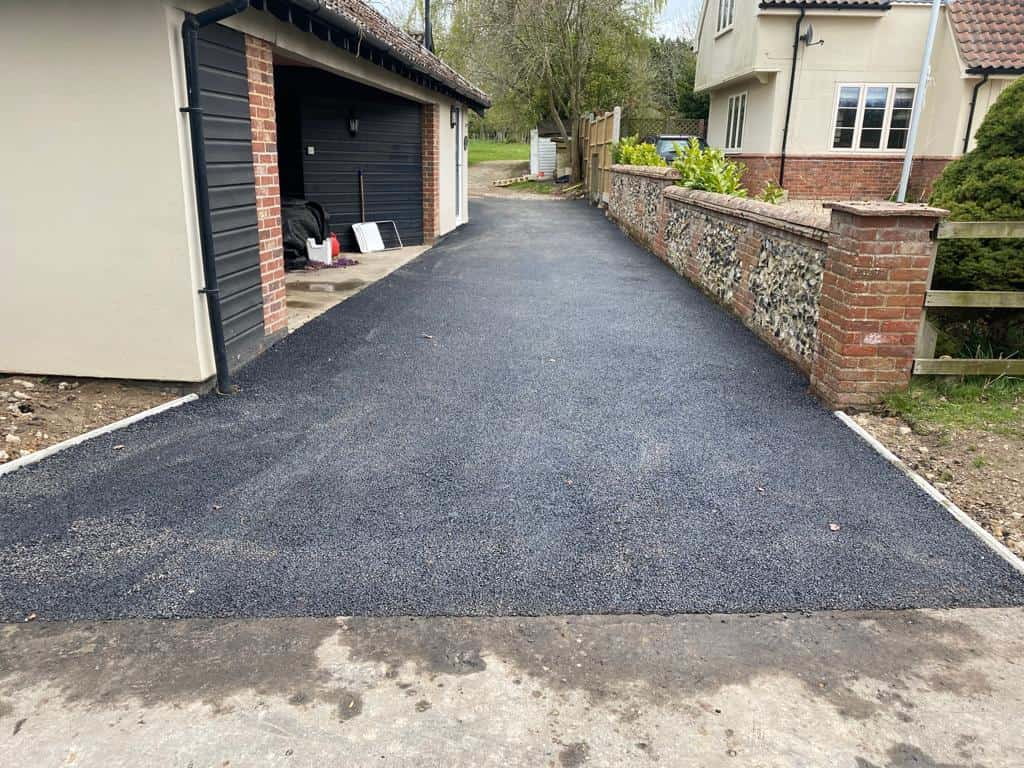
Is Tarmac a Good Choice for a Frequently Used Driveway?
A driveway used several times each day needs more than an attractive surface. It must support regular vehicle movements, provide dependable access and cope with the repeated stresses created by turning, parking and braking.
Tarmac can be a strong choice for a frequently used driveway when the ground is prepared correctly and the surface is laid to an appropriate specification. Its performance, however, depends on much more than the visible top layer. The quality of the sub-base, drainage and installation all determine how well the completed driveway withstands daily use.
Why Tarmac Works Well for Frequently Used Driveways
Tarmac creates a firm, continuous surface without the individual joints found in some other driveway materials. This makes it practical for properties where vehicles enter and leave regularly.
Its principal advantages include:
- A smooth surface for driving and walking
- Reliable support for regular domestic vehicle use
- Good resistance to changing weather conditions
- Straightforward maintenance
- Suitability for driveways of different shapes and sizes
- A neat appearance that complements many properties
- The ability to form gentle gradients for effective drainage
When correctly installed, tarmac distributes vehicle loads across the prepared base rather than allowing pressure to remain concentrated beneath individual tyres.
The Sub-Base Determines Long-Term Performance
A durable tarmac driveway begins below the finished surface. The sub-base provides the structural support needed to prevent movement, settlement and cracking.
Before installation, weak or unsuitable material should be removed. The formation must then be prepared to receive a suitable depth of well-compacted aggregate. The required construction will depend on ground conditions, anticipated use and the types of vehicles using the driveway.
An inadequate base may lead to:
- Depressions forming beneath parked vehicles
- Cracks developing along weak areas
- Uneven sections where the ground has settled
- Water collecting in low points
- Edges beginning to break away
- Repairs failing because movement continues underneath
Applying new tarmac over an unstable surface will not correct underlying weakness. Proper preparation is therefore one of the most important parts of the installation.
Drainage Must Be Included in the Design
Water can shorten the serviceable life of a driveway when it is allowed to collect or penetrate weakened areas. Standing water may gradually affect the surface and the supporting layers beneath it.
A professionally planned driveway should include suitable falls so that rainwater moves away from the main parking and access areas. Depending on the layout, drainage channels or other features may also be required to manage runoff effectively.
The surrounding ground and driveway edges should be considered as part of the design. Water washing across an unsupported edge can contribute to erosion and eventual surface failure.
Tarmac Provides a Practical Driving Surface
A well-laid tarmac driveway offers a relatively smooth and consistent finish. This can make regular manoeuvring more comfortable, particularly where vehicles need to reverse, turn or pass through a narrow entrance.
The continuous surface also makes it easier to sweep away leaves, soil and other debris. Unlike surfaces containing numerous individual units, there are fewer joints where loose material or unwanted growth can accumulate.
For a driveway that forms the main daily access to a property, these practical qualities can be particularly useful.
Edge Support Helps Prevent Deterioration
The main body of a tarmac driveway receives support from the surrounding surface, but its outer edges can be more vulnerable. Repeatedly driving over an unsupported edge may cause it to crack or crumble.
Strong edging helps contain the construction and protects the tarmac where it meets lawns, planting areas or other surfaces. It can also produce a more defined appearance and help the driveway retain its intended shape.
Drivers should ideally avoid cutting across vulnerable corners or parking with tyres partly off the finished surface. A suitable layout can reduce these pressures by providing sufficient room for normal vehicle movements.
Can Tarmac Cope With Parked Vehicles?
Tarmac is widely suited to domestic parking when it has been constructed for the expected level of use. The base must be capable of supporting the load, while the surface should be properly compacted and allowed to settle as required.
Areas where vehicles frequently turn their wheels while stationary may experience additional stress. Providing enough manoeuvring space can help minimise concentrated pressure on the surface.
Any fuel, oil or chemical spills should be addressed promptly, as some substances may soften or weaken the binder within the material.
Maintenance Still Matters
Although tarmac is generally straightforward to maintain, it should not be ignored after installation. Regular checks can identify small changes before they affect a larger section.
Useful maintenance includes:
- Keeping the surface and drainage points clear
- Monitoring areas where water begins to collect
- Addressing small cracks before they widen
- Checking that edges remain supported
- Avoiding persistent overloading
- Investigating dips or movement rather than covering them
Not every mark or minor surface change indicates a serious problem. However, repeated cracking, sinking or standing water may suggest an issue beneath the visible layer.
When Might Another Surface Be More Suitable?
Tarmac is practical and durable, but the best material depends on the property, ground conditions and desired finish. A homeowner seeking a highly decorative pattern or a broad choice of detailed colour combinations may prefer to consider another surfacing option.
The decision should also account for drainage, driveway gradients, access during installation and the expected vehicle load. A professional assessment can determine whether tarmac is suitable for the site and what preparation will be needed.
At Wroxham Driveways & Surfacing, we assess the existing ground, drainage requirements and intended use before recommending a driveway specification. This ensures that the proposed surface is designed around the property rather than selected on appearance alone.
Conclusion
Tarmac can be an excellent choice for a frequently used driveway. It provides a smooth, practical and dependable surface, but its long-term performance relies on sound ground preparation, effective drainage, adequate edge support and careful installation.
If you are considering a new or replacement tarmac driveway in Wroxham, Norfolk, contact Wroxham Driveways & Surfacing to arrange an assessment. We can examine the site and advise whether tarmac is appropriate for the way your driveway will be used.
Call us on: 01603 361 697
Click here to find out more about Wroxham Driveways & Surfacing
Click here to complete our contact form and see how we can help with your driveway needs.